Tuesday, March 13, 2012

Quick update on Chase Bank arrests, SB469 interview, and the bigger picture...

There is a whole lot going on right now on the #occupy front.  We've got a lot going on right now so I thought I'd give a quick update before I head to work.

First we've got a number of Occupyers in jail right now after shutting down a number of Metro Atlata Chase Banks yesterday and via legal... 

The 8 jailed in Dekalb County have been rushed before a judge. This is NOT a good thing. Their bond has been set at $650 cash per person. That's $5,200 to get 8 of the 14 out of jail (it would have been around $650 to get ALL 8 of them out before). This is an OBVIOUS reaction to the prisoners being political. If you can help in any way, to any amount, please do. 

Its Jamie Dimon's Birthday today so we're going to join occupiers across the country and throw him a birthday bash 

At 12:30 the Atlanta City Council will be looking at ordinances to decided if people can continue to camp in public parks.

At 4pm there is an emergency General Assembly on the steps of the Gold Dome to talk about SB469.  Topics of discussion will likely include Saturday's We Are Georgia - Mass Rally - Good Jobs, Free Speech, Human Rights, rally.  

Like I said, lots going on...  

SB469 and the bigger picture...

Haven't had a chance yet to post this great podcast interview with Sara Amis of Occupy Atlanta and Eric Robertson the political director of my Teamster Local 728 talking about SB469 which is currently waiting to be heard by committee in the House under the Gold Dome here in Georgia. 

SB469 is a direct response to our efforts to Occupy AT&T and also our efforts to #occupy foreclosed homes.  As I mentioned yesterday, there is a working class movement growing in Atlanta and across the state.  This is a direct threat to the political power of the 1%.

SB469 is a full scale assault on the working class of Georgia to head us off before we truly get our footing.  But the reality is that this isn't just about Georgia which is why I hope you take a moment to share on Facebook and twitter some of the items i've linked to because what we are learning here on the ground in Georgia can, and must, be repeated and expanded all across this country.  This isOccupy vs. the Global Race to the Bottom and we're all in this together whether we like it or not.

As it stands with Citizen United, the 1% can put as much money as they want into political campaigns.  In fact, this election cycle 25% of super PAC money coming has come from just 5 rich donors.  The 1% can buy all the TV ads to beam into your home that they want, but you can't even stand outside of their house with a sign protesting this state of affairs.

The 1% are terrified of people like Darlene Jones-Owens. People who are willing to go to jail in order to help improve the lives of others.  

Our efforts at Occupy AT&T have been paying off.  So far 200 jobs have been saved.  Not too bad for a few nights sleeping on the curb away from my wife and dogs.

One of the aspects of #occupy that many don't seem to understand is that much of the efforts right now are really, truly, about 20 and 30 years from now.  The networking of different individuals and groups, the engagement and learning from one another; the skill sets that are being developed on how to organize direct actions, raise money to get people out of jail, organize dissent both inside and outside of the public arena is the ultimate end product.  

Whether SB469 passes or not--we're going to give them hell and force them to pay the consequences.  Whether all 740 jobs can be saved at AT&T or not--we're going to give them hell and force them to pay the consequences.  This is just the beginning.  We will make mistakes, we will lose some battles.   But in the end we will pull together and stop the corporate machine trying to churn us into neo-feudal serfs for our corporate masters. This is why there is such a fierce effort to stop us.

For 30 years Neoliberals of both Republican and Democratic stripes have been pushing an agenda created by and for the 1% while we've sat back waiting for someone else to stop it.  After 4 years of Obama we can finaly put to rest this false hope that someone else will come save us.  We don't need political saviors, we have to do it ourselves.  We are 30 years late to a class war, but as I always say... better late than never.  

I_was_there

Sunday, March 11, 2012

30 years of outsourcing, downsizing, and worker intimidation in the name of corporate profits stops today....

Last Wednesday I joined with about 25 occupiers, jobs with justice activists, and friends to hit a number of AT&T locations during the day to spread our message about Occupy AT&T and why we have occupied.


Here was the Mic-Check I wrote which we used at each location. 

Mic Check...

We are here.  
With our tents, our time, and our love.
To show solidarity
For the 740 workers
who send their kids to our schools, 
attend our churches,
and help create the vibrant communities we depend on.

We are here 
to show solidarity
For the 740 workers throughout the southeast
who helped create record profits for AT&T and the 1%
We stand with our brothers and sisters of CWA
to draw a line in the sand.

30 years of outsourcing,
downsizing, 
and worker intimidation in the name of corporate profits 
stops today.

We demand 
that the workers who create the wealth of this company
share in its prosperity.
We demand
and end to intimidation 
and harassment in the workplace.

We demand 
all jobs be saved 
and no benefits cut.

The 1% 
don't get to free ride 
on the backs of the rest of us 
any more!

We've been here 
for 22 days... 
and we aren't going anywhere.

At each location we were escorted off the property for trespassing.  But the bigger picture is that these efforts are working!

So far 200 jobs have been saved.  Now we are working to fight to make sure all 740 jobs are saved.  

Jobs with Justice Atlanta has a great post on the Family Day event yesterday which Occupy Atlanta held for family members of CWA who are about to lose their job here in Atlanta.

Some of the kids of local CWA workers who are to be laid off wrote letters to AT&T


A working class movement is growing in Atlanta Georgia. 

ALEC, the Georgia Chamber of Commerce, and the GOP in the state legislature have responded in kind with a direct attempt to shut down our efforts. 

SB469 is a direct response to this threat [sic] of everyday working class people standing up and doing something about their interests rather than just passively accepting what their corporate masters deem is best.

This is why I'm asking for your support.  Please take a moment to share some information with your friends, family, and social networks online about the Occupy AT&T efforts here in Atlanta to save 740 jobs across the south east.  First we need support in building awareness about our efforts.  Secondly these efforts can be harnessed in communities across this nation to stand up and fight back against the efforts of the 1% to squeeze profits out of working people.

Please sign this petition against SB469 and pass it along to your friends-- GEORGIA BILL (SB 469) would make DR. MARTIN LUTHER KING, JR. ASHAMED

And please come out to our upcoming rally March 17th here in Atlanta We Are Georgia - Mass Rally - Good Jobs, Free Speech, Human Rights, Not Partisan Attacks!

Thursday, March 8, 2012

Gov’t Spending In Recessions and Recoveries

Paul Krugman earlier in the week... noted that:

Adjusted for inflation, Reagan-era spending rose 10.2 percent in the first 10 quarters of recovery, Obama-era spending only 2.6 percent.

Why did government spending rise so much under Reagan, with his small-government rhetoric, while shrinking under the president so many Republicans insist is a secret socialist? In Reagan’s case, it’s partly about the arms race, but mainly about state and local governments doing what they are supposed to do: educate ... children, invest in infrastructure for a growing economy.

Under President Obama, however, the dire fiscal condition of state and local governments ... has led to forced spending cuts. The fiscal straits of lower-level governments could and should have been alleviated by aid from Washington... But this aid was never provided on a remotely adequate scale. ...

We’re talking big numbers here. If government employment under Mr. Obama had grown at Reagan-era rates, 1.3 million more Americans would be working as schoolteachers, firefighters, police officers, etc...
And once you take the effects of public spending on private employment into account, a rough estimate is that the unemployment rate would be 1.5 percentage points lower..., or below 7 percent — significantly better than the Reagan economy at this stage.

Obama isn't a big spender--especially on the things that matter contrary to what Fox News tells you... 


The 80’s/now comparisons are plotted below and the table compares the last four recessions/recoveries.


Source: NIPA

President Reagan’s military Keynesianism shows up clearly in the early 1980s, with marginal fiscal drag from the states.  In the Great Recession (GR), both President’s GW Bush and Obama kicked up the non-defense federal spending, but what really stands out here is the state/local fiscal drag.

The table shows just how limited total gov’t spending has been over the past four years when you combine the feds with the states.  And while the dates don’t line up that neatly, you certainly can’t make the case that it’s D’s Presidents who are the big, fat Keynesians.  If anything, they look kind of tepid.

John Lennon once said something to the effect of “everything you think you know is wrong.”  He was right.

Tuesday, March 6, 2012

School of Hard Knocks: Fed Education Data Shows Racial Disparities, Unequal Opportunity

ProPublica

Schools serving the most black and Hispanic students are less likely to offer rigorous subjects such as calculus and physics and more likely to employ teachers with only a year or two of experience. Those findings come from a new data analysis by the U.S. Department of Education’s Office of Civil Rights.

Later today, the department will be releasing the survey data underlying this analysis — the 2009-2010 Civil Rights Data Collection, which contains a wide range of school-level statistics covering course offerings, teacher salaries and absenteeism, student discipline and student outcomes.

Among the findings highlighted by the Education Department:

  • Black students were more than three times as likely to be suspended or expelled relative to their white counterparts. Racial disparities in discipline, of course, have been reported before, but according to the department’s analysis, this trend held true across all districts in the sample.
  • White and Asian students were disproportionately overrepresented in gifted and talented programs -- comprising nearly three-quarters of enrollment in such programs -- while black and Hispanic students were disproportionately underrepresented.
  • Students with disabilities comprised only 12 percent of students in the sample, but were an overwhelming majority of students subjected to physical restraint.

Poverty Among Young People Sharply Rising

JJIE.org:

With more than half a million students attending classes in rural schools, Georgia has the third largest absolute rural student enrollment estimates in the nation. According to the Why Rural Matters assessment, only six out of 10 rural students in the state are expected to graduate from high school.

For the last two years, Lisa Schnellinger has researched the demographics of the North Georgia area, while producing tutorials for the University of Georgia regarding techniques for covering and reporting on rural poverty. While covering Pickens County, Ga. – a county where more than 15 percent of the total juvenile populations lives under the poverty line – she noted a sharp contrast between the rural wealthy and rural impoverished.

“It has a very wealthy eastern half and a pretty impoverished western half,” she said. “It’s like two different worlds.”

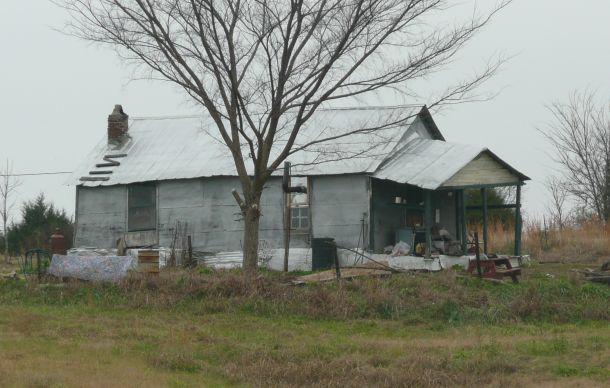
She said that while the eastern half of Pickens County consists of fairly affluent neighborhoods, including a number of gated communities, she said the western landscape consists mostly of trailers and mobile homes.

“They’re basically fortunate that the weather isn’t worse here, because they don’t look like they would hold up,” she added. “They’re just kind of tucked into these smaller, rural roads, where if you’re traveling through the county on the main road, they really are kind of invisible.”

Schnellinger did a week of guest teaching at the local high school, and made several observances about the community and its demographics.

“What is striking to me is that there is a big divide between people who are locals, natives to the area in these rural counties, and people like me, who are outsiders, who came in later,” she said.

“It’s not that people are unfriendly. They’re great, they’re really nice up here, but they know I’m not from here, and it takes some time for them to trust somebody who maybe isn’t from here, because so often, they have been judged by people like me.”

Despite the pervasiveness of poverty in the area, Schnellinger said that the students she observed were reluctant to address their economic conditions.

Photo by Pam Simpson | activerain.com

“It’s very difficult as an outsider to be accepted in that way, to have someone take you into their confidence in terms of talking about how difficult their lives are,” she said. “They don’t like to talk about it, especially the kids at the age group I knew. They just want to fit in, the last thing they want is to let anybody know they’re family’s not doing very well.”

Mahaffey likewise said one of the largest issues surrounding rural poverty pertains to public perceptions.

“If you poll the public, and this has been consistent over the years, and you ask them to give a sense of what they think rural America is, there are really two predominant themes that emerge,” Mahaffey said. He then described two divergent, stereotypical views of rural America, one of them an idyllic, “Norman Rockwellian” burgh and the other a wasteland of abject poverty, ill health and illiteracy.

“The vast majority of rural America is much more diverse, much more culturally rich, much more engaged in building community and where people are deeply committed to the success of their family,” he said. “We work very hard to break down some of those stereotypes, [because] those stereotypes influence public policy.”

The Why Rural Matters report also notes that rural education enrollment figures have increased since the organization’s 2008-2009 findings. Mahaffey said that the rural classrooms are also becoming increasingly multicultural due to immigration and migration from urban areas.

“Children are becoming more and more diverse,” Mahaffey commented. “There is a significant increase in the number of children of color that are going to schools in rural places, as well as a wide range of ethnic groups and migrant groups.”

According to research findings, minority pupils now make up more than a quarter of the rural student body. The Rural School and Community Trust findings indicate that the number of Hispanic students in the nation’s rural schools have increased more than 150 percent since 2009.

Mahaffey said that effects of the ongoing recession are almost impossible to overstate in terms of influence on the state of contemporary rural education.

“With respect to the recession across America in education, [it has] been critical to the point of devastating on certain levels,” he said. “If it wasn’t for the stimulus package and the American Reinvestment and Recovery Act, hundreds of thousands of teachers would have been let go. State budgets across the country are in real difficult shape around education, and so are support services and professional development.”

Mahaffey said that school funding system reforms are essential in curbing “inequities” in how resources and support are allocated to rural areas.

“Basically, we fund schools based on your ZIP code, and that is inherently unfair for kids who live in high poverty places,” he said. “It’s a critically important issue, so when the recession hit, with the drop in property value and others things that have impacted those revenue streams for schools, it’s been a real challenge.” Mahaffey noted that the three states that have seen the most vocal opposition from teachers to public employee collective bargaining agreements – Indiana, Iowa and Wisconsin – are all states with high percentages of students attending classes in schools classified as rural.

Mahaffey said that Title I of the Elementary and Secondary Education Act, which implements a funding stream that provides resources to schools based on a per-people-spending formula, is unfair to students living in rural areas.

“This is a top public policy issue for us,” he said. If you’re a poor kid in a low population place, there’s less per-people-spending for kids there [than there is] in a higher concentration poverty place.”

Mahaffey said that he supports a “community school model” for rural school districts, with “wraparound, integrated” incentives such as health care and legal services provided for teachers that work in rural communities.

“We focus on initiatives, broadly speaking, to grow your own,” Mahaffey stated. He said that programs that develop and train former rural students, with additional “point of delivery” services included, could help teacher retention rates in impoverished areas.

“A lot of rural schools are already living that model,” he said. “Many of them, interestingly enough, go back and teach at schools they went to as children.”

Mahaffey concluded by criticizing politicians that may consider education budgets as potential targets heading into the 2012 election cycle.

“It’s a bit disingenuous on the part of public officials, and I don’t care if they’re local, state or federal, that they make a grandstanding point about the fact that our children are our future,” he stated. “And then, not fund education programs.”

“There’s a real disconnect in my mind about how people can make those public statements and then not carry on with their support for investing in education.”

Throw your life on the scales of destiny...

Dsc_030549494

“Being human means throwing your whole life on the scales of destiny when need be, all the while rejoicing in every sunny day and every beautiful cloud.”  ― Rosa Luxemburg

Monday, March 5, 2012

If government employment under Mr. Obama had grown at Reagan-era rates, 1.3 million more Americans would be working as schoolteachers, firefighters, police officers, etc..

Economist's View: Paul Krugman: States of Depression

Adjusted for inflation, Reagan-era spending rose 10.2 percent in the first 10 quarters of recovery, Obama-era spending only 2.6 percent.

Why did government spending rise so much under Reagan, with his small-government rhetoric, while shrinking under the president so many Republicans insist is a secret socialist? In Reagan’s case, it’s partly about the arms race, but mainly about state and local governments doing what they are supposed to do: educate ... children, invest in infrastructure for a growing economy.

Under President Obama, however, the dire fiscal condition of state and local governments ... has led to forced spending cuts. The fiscal straits of lower-level governments could and should have been alleviated by aid from Washington... But this aid was never provided on a remotely adequate scale. ...

We’re talking big numbers here. If government employment under Mr. Obama had grown at Reagan-era rates, 1.3 million more Americans would be working as schoolteachers, firefighters, police officers, etc...
And once you take the effects of public spending on private employment into account, a rough estimate is that the unemployment rate would be 1.5 percentage points lower..., or below 7 percent — significantly better than the Reagan economy at this stage.

One implication of this comparison is that conservatives who love to compare Reagan’s record with Mr. Obama’s should think twice..., in reality Reagan was much more Keynesian than Mr. Obama, faced with an obstructionist G.O.P., has ever managed to be.

More important, however, there is now an easy answer to anyone asking how we can accelerate our economic recovery. By all means, let’s talk about visionary ideas; but we can take a big step toward full employment just by using the federal government’s low borrowing costs to help state and local governments rehire the schoolteachers and police officers they laid off, while restarting the road repair and improvement projects they canceled or put on hold.

Friday, March 2, 2012

Ta-Nehisi Coates reminds us that Breibart was a dirtbag...

On Making Yourself Right

I have heard it said by some fellow liberals that Breitbart was in fact a good person, that his public persona was not the same as his private. This kind of praise is so broadly true of most contraversial public figures as to be meaningless. And it is irrelevant. Breitbart may well have been an excellent father and a great friend but that is not why we are talking about him. We are noting his death because of the impact he had on our politics and our conversation. It must be said that that impact was for the worse. Any talk of his private life, is an attempt to change the subject and avoid discomfiting truths.

It is wholly appropriate to be sorry that Andrew Breitbart died. But in the relevant business, it is right to be sorry for how he lived. 

Obama's Wall Street